

About Kilter
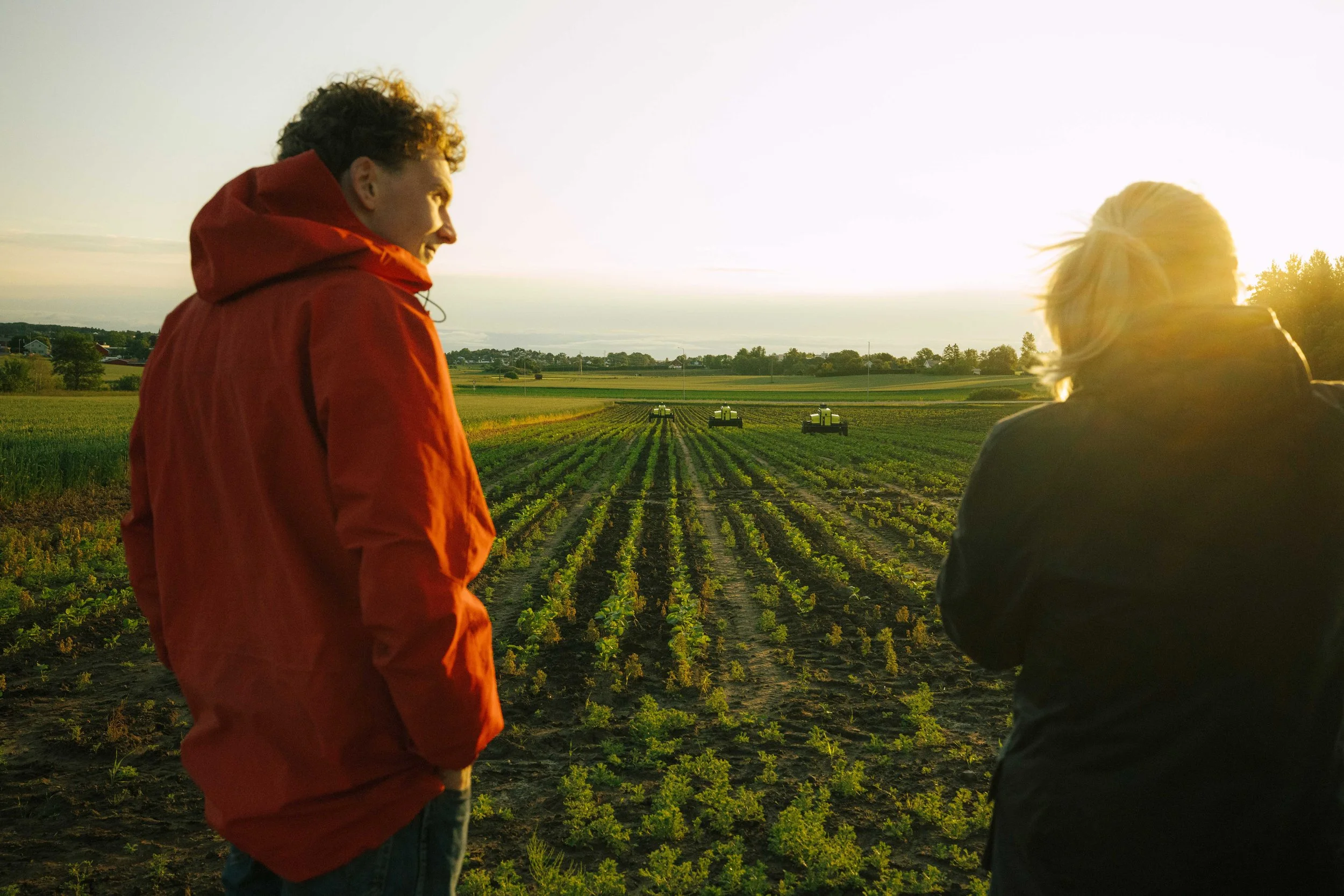
Kilter is a Norwegian agricultural robotics company. We build the AX-1, an autonomous weeding robot that treats weeds plant by plant, so growers can protect their crops with a fraction of the herbicide.
Today the AX-1 is in daily use on vegetable farms in six countries, across Europe and Australia. We are based in Langhus, just south of Oslo.
From blanket spraying to plant-level precision
Conventional weed control treats the whole field or the whole row. The AX-1 treats each weed on its own. Cameras and AI identify crops and weeds, and software decides where to act. Single Drop Technology then places a single droplet of herbicide on the weed, with 6x6 mm precision.
The result is up to 95% less herbicide. Selectivity moves from chemistry to software, and growers get back control over weed management, with less manual weeding.
Our story
Kilter began in 2007 as a joint research initiative between NIBIO (the Norwegian Institute of Bioeconomy Research) and the engineering company Adigo AS. The goal was to solve one hard problem: removing weeds in vegetable crops without harming the crop.
Together with farmers and researchers, we tested lasers, microwaves, flaming and mechanical tools. Placing a single droplet of herbicide directly on the weed proved the best balance of effect, crop safety and cost. This work, known as the AsteriX project, became the basis for the AX-1.
In 2020, one of our trial farmers asked to buy the machines. A team of six developed and delivered them. Kilter AS was founded on 2 February 2021, with two pioneer customers on board from the first day.
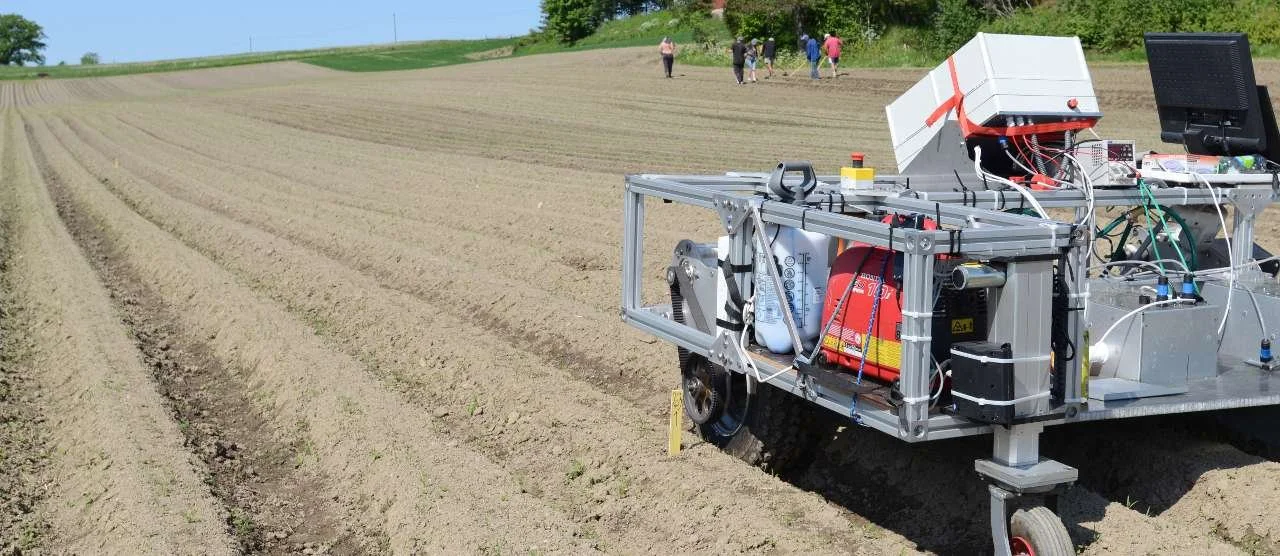
Early protype during field trials in 2016
Food production in balance with nature
The name Kilter comes from being "in kilter": in balance. Farmers need to protect their crops and their income. Soil, water and the surrounding nature need less chemistry. We do not think growers should have to choose between the two.
By treating only the weeds that need treatment, the AX-1 cuts herbicide use and reduces the load on soil and surroundings. Because the crop itself is not sprayed, it avoids herbicide stress, which can give higher yields and better quality. In our design process, farmers are the experts, and every feature is developed together with the growers who use it.
